

The Setting
Faced with the predatory marketing of the tobacco and vaping industry on young people, the Massachusetts Department of Public Health’s Tobacco Prevention and Cessation Program (MTCP), in partnership with the Massachusetts Attorney General’s Office (AGO), worked with their social marketing agency, MORE, to develop a campaign to promote quitting nicotine among young adults. MORE approached MSR to lead the research, both formative and creative concept testing.
The goal was to understand what attitudes or behaviors contribute to why quitting is so difficult and to empower young adults themselves to recognize and overcome those obstacles to quitting. To identify which strategies to highlight in the campaign, we needed to first uncover the biggest barriers to quitting with young adults today. Then we could identify motivators that would actually spark sustainable change. This is where MSR came in.
Our Approach
MSR conducted a series of IDIs and a large-scale survey with 250+ adults (ages 18 and 28) who have a history of using vape products or nicotine pouches. Findings were synthesized through a Barrier Analysis across three distinct audience segments:
- Those who successfully quit (“doers”)
- Those actively considering or attempting to quit (“partial-doers”)
- Those uninterested in quitting (“non-doers”)
This strategic methodology enabled us to isolate the true barriers to quitting and differentiate them from less influential factors.
Key Findings
- Pivotal finding: The further someone is along the path to quitting, the more likely they are to recognize the negative effects of vaping on their mental health. Recognition of negative mental health effects of vaping was 20% higher among those trying to quit and 40% higher among successful quitters compared to those uninterested in quitting.
- Hidden paradox: Many young adults who use these products see vaping as providing relief from stress/anxiety, not realizing these products might be fueling the problems they seek to escape.
- Breakthrough insight: The path to quitting nicotine is motivated more by mental health benefits than by general health risks or fear-based messaging.
This systematic, data-driven approach would allow us to uncover real factors influencing those who do and don’t quit– not just what’s holding people back from quitting, but also what isn’t. With this information we would be able to guide the strategic focus of the campaign effectively, removing guesswork from the equation.
Impact
Public health campaigns for years have focused on raising awareness around the risks of vaping and nicotine use. Which ultimately isn’t compelling enough to change young adult’s behavior. Barrier analysis allowed us to uncover a narrative that could actually motivate change.
By identifying the central role that mental health plays in young adults’ decisions to use or quit vaping and other nicotine products, we created a strategic grounding based on real-world experiences. With this, MORE developed a compelling campaign that directly challenged the assumptions we uncovered in our study—making the link between the benefits of quitting nicotine and better mental health, not the other way around.
The campaign, called “This Ad Won’t Make You Quit Vaping,” speaks directly to 18 to 24-year-olds who vape or use other nicotine products and acknowledges that advertising might not make them want to quit vaping, but knowing that they will feel less anxious or stressed might.
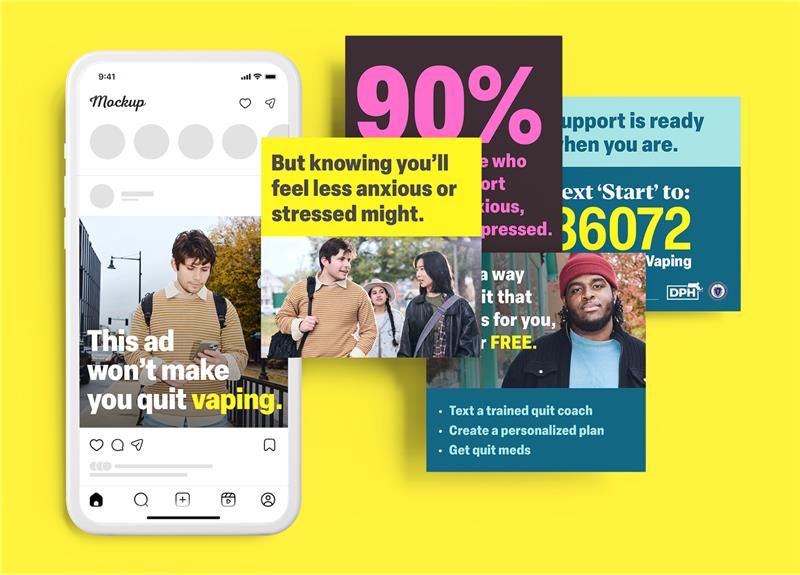
It meets young adults where they are, with honest and empathetic messaging to help them recognize the positive impact quitting can have on them—and then connects them to quitting resources that are free and ready when they are.
From November 2025 to February 2026, the paid media campaign drove strong engagement and meaningful increases in MA’s tobacco and nicotine Quitline activity, with completed enrollments in a specific young adult program more than tripling compared to the same time period the previous year.
Barrier Analysis systematically explores the behavioral determinants that drive or block change. It gives organizations a clear roadmap for designing interventions that actually shift behavior—taking the guesswork out of behavior change.
To learn more about Barrier Analysis and how it can benefit your work, contact us for a consultation today.